Every exchange eventually learns the same lesson: onboarding controls decide who gets in, but transaction monitoring decides what you catch once they are inside. A customer who passed every identity check on day one can route funds through a mixer on day ninety, and the only control standing between that transfer and a regulatory finding is the monitoring program — the rules that fire, the analysts who review, and the reports that get filed. This guide explains how transaction monitoring for crypto exchanges actually works layer by layer: what the alert rules watch, how an alert becomes a case and a case becomes a suspicious activity report, why false-positive tuning is the difference between a working program and a drowning one, and where the on-chain data that makes crypto monitoring unique fits in.
Quick solution
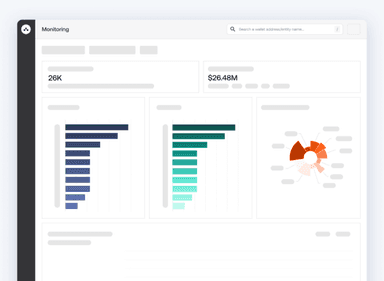
If you need the short version: run two monitoring layers and connect them. The on-chain layer screens every deposit and withdrawal against blockchain analytics — counterparty exposure to sanctioned entities, darknet markets, mixers, ransomware, and stolen funds — and it fires in real time so risky withdrawals can be held before broadcast. The off-chain layer watches account behavior your ledger sees but the chain does not: velocity spikes, structuring just under reporting thresholds, dormant accounts that suddenly move volume, and login patterns that do not match the customer profile. Route both layers' alerts into one case queue with severity-based service levels, staff it to your real alert volume rather than your hoped-for one, and file suspicious activity reports within the 30-day window US rules require. Tune quarterly against disposition data — rules that only ever produce dismissed alerts are noise you are paying analysts to read. Wire the whole loop into your crypto AML compliance software so identity, screening, and monitoring share one view of each customer.
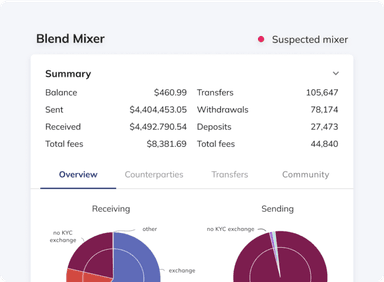
Traditional transaction monitoring grew up inside institutions that could only see their own ledger. A bank watching a wire transfer knows the amount, the counterparty bank, and whatever the payment message says — nothing about where the money was three hops earlier. Crypto inverts this. Public blockchains give an exchange visibility into the entire prior history of the funds arriving at its deposit addresses, and blockchain analytics turns that raw history into risk categories.
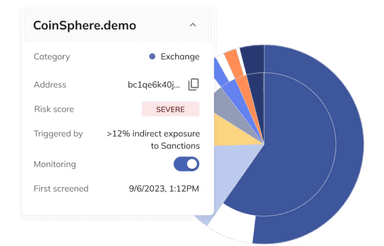
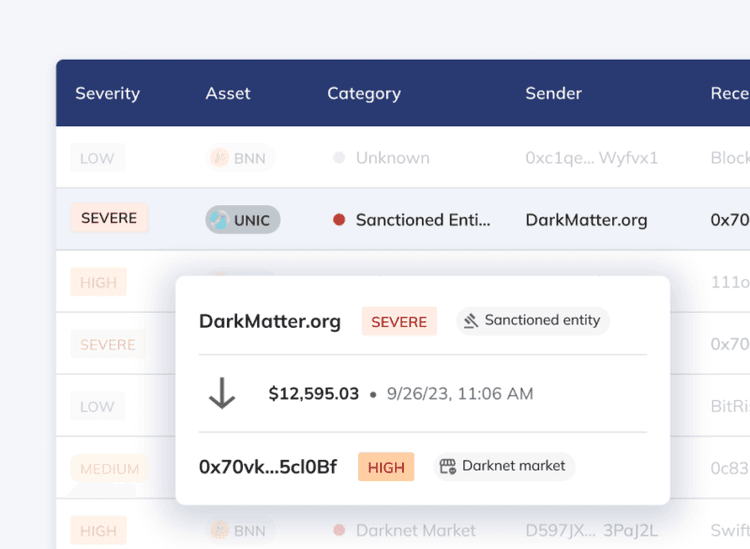
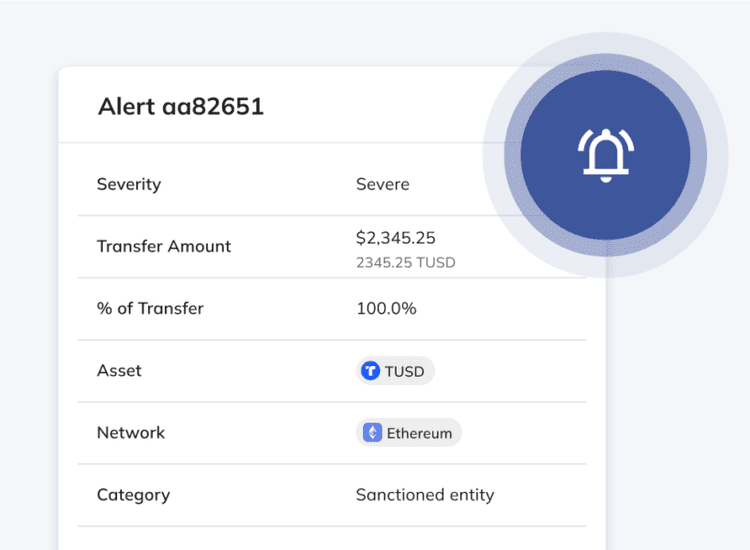
That difference defines the first monitoring layer. Every deposit gets its source exposure computed: what share of the funds traces back to sanctioned entities, darknet markets, ransomware wallets, scams, or mixers, within some number of hops. Every withdrawal gets the same treatment in reverse — where is this customer sending funds, and is the destination a service you can name or an unhosted wallet with darknet exposure. The alert fires on category and severity, not just amount: a two-thousand-dollar transfer from a sanctioned entity outranks a two-hundred-thousand-dollar transfer between known exchanges.
The second layer is the one banks would recognize: behavioral monitoring on your own ledger. Deposits structured just under the ten-thousand-dollar threshold. A retail-profiled account suddenly turning over institutional volume. Rapid deposit-trade-withdraw cycles that use the exchange as a pass-through rather than a venue. Multiple accounts funded from one source and withdrawing to one destination. None of that is visible on-chain, because it lives in the relationship between accounts and time — which is exactly why programs that rely on blockchain analytics alone have a blind spot the size of their own order book.
The two layers are complementary, not redundant, and examiners increasingly expect both. On-chain analytics without behavioral rules misses structuring; behavioral rules without on-chain analytics miss a clean-looking deposit whose funds left a ransomware wallet four hops ago.
The alert rules that actually matter
Because no single public source lays out a working exchange rule set side by side, we compiled one from FinCEN advisories, FATF red-flag guidance, and vendor documentation:
| Rule family | What it detects | Typical trigger | Layer |
|---|---|---|---|
| Sanctions exposure | Funds to or from designated entities | Any direct exposure; indirect above a set share | On-chain |
| High-risk category | Darknet, ransomware, scam, stolen-fund exposure | Severity scaled to share and directness | On-chain |
| Mixer interaction | Obfuscation before deposit or after withdrawal | Any material exposure within defined hops | On-chain |
| Structuring | Splitting to stay under reporting thresholds | Repeated amounts just below the line in a window | Behavioral |
| Velocity anomaly | Volume out of line with the customer profile | Multiples of trailing baseline in a day or week | Behavioral |
| Pass-through | Exchange used as a hop, not a venue | Deposit to withdrawal above a share, under a time gap | Behavioral |
| Dormancy break | Account wakes up and moves large volume | No activity for months, then outsized transfers | Behavioral |
Two design decisions matter more than the rule list itself. First, severity tiers with different handling: severe alerts hold the transaction for review before release, while lower tiers accumulate into the queue for daily working. Holding everything freezes legitimate customers; holding nothing means your monitoring is a diary, not a control. Second, category-level configuration — a rule set that treats a decentralized exchange counterparty the same as a darknet market either drowns you in noise or forces you to shut the category off entirely.
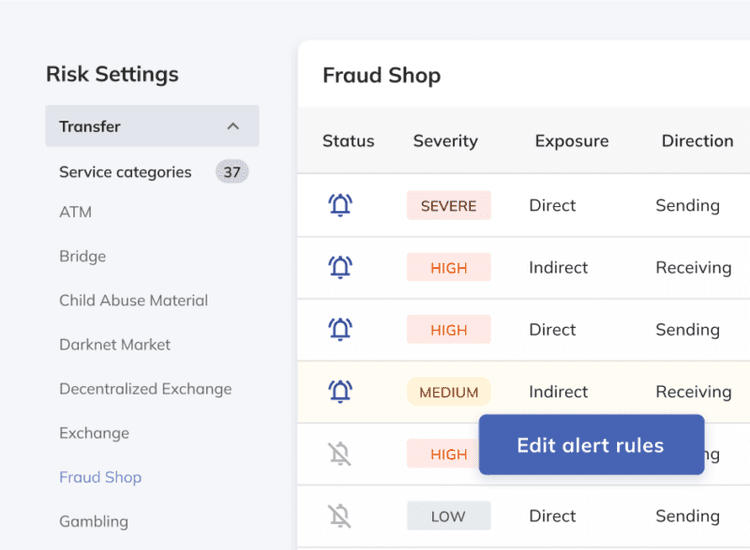
The rule set also has to reflect your own product surface. An exchange with fiat ramps needs structuring rules; a crypto-only venue needs tighter unhosted-wallet rules; a platform with margin needs rules for collateral movements. Copying a vendor's default configuration and never revisiting it is the single most common finding in monitoring examinations.
An alert is not a conclusion — it is a claim that something deserves a look. What turns monitoring into a defensible program is the pipeline that processes those claims.
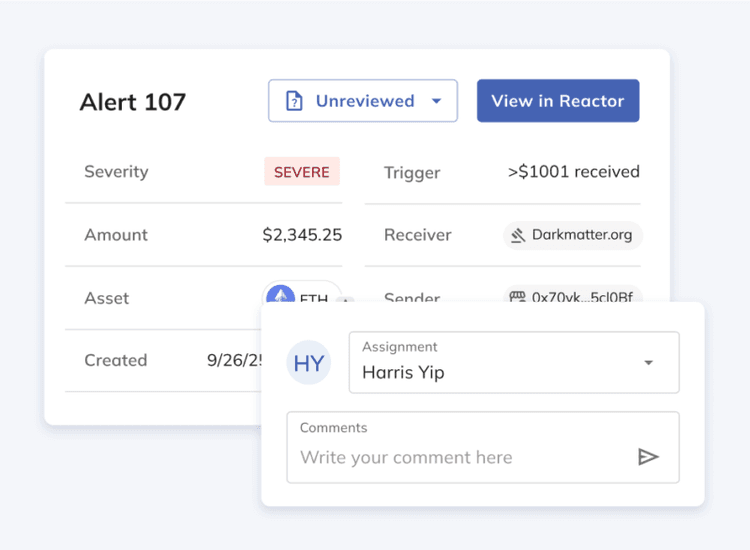
Triage comes first. Every alert gets an initial disposition within a service-level window scaled to severity: severe alerts the same day, lower tiers within a few business days. The triage analyst confirms the data, checks whether the pattern has an obvious innocent explanation, and either dismisses with a recorded reason or escalates to a case.
Case investigation is where the real work happens. The investigator assembles the customer's full picture — identity file from onboarding, transaction history, prior alerts, on-chain exposure detail — and answers one question: is there a reasonable explanation for this activity, or is it suspicious? That file matters as much as the answer, because examiners review dismissed cases too, and an unexplained dismissal is treated as a missed filing.
Filing closes the loop. In the US, a suspicious activity report must be filed within 30 calendar days of detecting facts that constitute a basis for filing — 60 if no suspect was identified — and the exchange must keep supporting documentation five years. The report narrative is written for a reader who cannot see your systems: what happened, why it is suspicious, what the on-chain trace showed, in plain factual language. Crypto adds one more decision after filing: whether to exit the customer, restrict the account, or keep monitoring — and that decision belongs in the case record with a named owner, because filing alone does not discharge the risk.
Escalation paths matter at the margins. A severe sanctions hit cannot wait for the daily queue; it needs an on-call path to compliance leadership the moment it fires, because a blocked-transaction report to OFAC runs on a ten-business-day clock, separate from the SAR timeline — the same escalation discipline covered in our guide to crypto sanctions screening tools.
More in Screening & Monitoring
Tuning: the discipline that keeps the program alive
Untuned monitoring fails in one of two directions. Rules set too tight bury analysts in false positives until real alerts rot in the queue — and a backlogged queue is itself an examination finding, because an alert nobody read is a detection that never happened. Rules set too loose produce a quiet queue and a false sense of safety.
The way out is disposition-driven tuning on a fixed cycle. Each quarter, pull every rule's numbers: alerts fired, share escalated to case, share that ended in a filing. A rule with hundreds of alerts and zero escalations in two consecutive quarters is either mis-thresholded or watching something that does not matter — tighten it, raise its threshold, or retire it, and document why. A rule whose alerts convert to filings at a high rate may deserve a lower threshold, because it is evidently pointed at real behavior.
Two guardrails keep tuning honest. Above-the-line/below-the-line testing: before raising a threshold, sample the alerts the new threshold would have suppressed and confirm none of them were real — a suppressed true positive means the change is wrong regardless of how much noise it removes. And change governance: every threshold change gets a written rationale, an approver, and an effective date, because the question an examiner asks about tuning is never whether you did it but whether you can show why.
The staffing corollary is unavoidable: alert volume is a head-count input, not just a software setting. A program that generates two hundred alerts a day with two analysts has made a decision about which alerts go unread — it just has not written that decision down.
Common mistakes that show up in enforcement actions
- Running the vendor's default rules forever. Default configurations are a starting grid, not a program. Enforcement actions repeatedly cite monitoring that was never calibrated to the platform's actual products, customers, and volumes — the examiner's first request is your tuning history, and "none" is an answer.
- Monitoring deposits but not withdrawals. Source-of-funds screening on the way in without destination screening on the way out means your platform can receive clean funds and send them straight to a sanctioned service. Direction matters; both directions are your exposure.
- Letting the queue backlog silently. An alert aging past its service level is a control failure in progress. Programs that survive examinations track queue age as a management metric and escalate staffing before the backlog becomes the story.
- Treating the SAR as the end of the story. Filing does not resolve the customer. Keep-or-exit decisions, restriction levels, and continued-activity reviews on 90-day cycles belong in the case record — regulators read a filed report on a customer you kept fully open with no documented rationale as a program that files and forgets.
"We are a newly licensed exchange standing up monitoring from zero" — this team turns on a blockchain analytics API for deposit and withdrawal screening in week one, because on-chain rules work out of the box in a way behavioral rules do not. Behavioral rules come in a second phase, once a few months of ledger history exist to baseline against. They resist the temptation to enable every rule at once, because an untriaged backlog on day thirty is worse than a smaller rule set they can actually work.
"We are a mid-size platform whose queue has become unmanageable" — this team stops adding analysts to a broken configuration and runs a tuning sprint instead: disposition rates per rule, thresholds moved with below-the-line testing, dead rules retired with documented rationale. Then they re-baseline staffing against the tuned volume. In most queues, a large share of the noise traces to a handful of rules — fixing five rules beats hiring five analysts.
"We are a compliance team preparing for our first regulatory examination" — this team rehearses the document requests: rule inventory with rationale, tuning history with approvals, queue-age metrics, sampled case files from alert through disposition, and SAR narratives with supporting on-chain traces. They fix the gaps the rehearsal exposes — usually thin dismissal notes and undocumented threshold changes — before the request letter arrives, because remediating during an exam costs triple.
Frequently asked questions
What is transaction monitoring for a crypto exchange?
It is the ongoing surveillance of customer transactions after onboarding: on-chain screening of deposits and withdrawals against blockchain analytics risk categories, plus behavioral rules over the exchange's own ledger for patterns like structuring and velocity anomalies. Alerts route to analysts, investigations become case files, and activity without a reasonable explanation becomes a suspicious activity report.
How is crypto monitoring different from bank transaction monitoring?
Banks see only their own ledger; exchanges also see the public blockchain, which means the source and destination history of funds is knowable in a way wire transfers never offered. That adds an entire on-chain rule layer — sanctions exposure, mixer interaction, darknet proximity — on top of the behavioral rules banks would recognize. The trade-off is a second data pipeline and vendor dependency that bank programs do not carry.
What triggers a SAR filing at an exchange?
Facts that give the exchange reason to suspect a transaction involves illicit proceeds, evades reporting requirements, or has no lawful purpose the customer's profile can explain. In practice the trigger is a case investigation that fails to find an innocent explanation. US rules require filing within 30 days of that determination — 60 when no suspect is identified — with supporting records kept for five years.
Does real-time monitoring mean every transaction is held?
No. Well-designed programs hold only the highest-severity events — direct sanctions exposure on a withdrawal, for instance — while everything else settles normally and alerts flow to the queue for review after the fact. Holding everything is operationally impossible at exchange throughput; the design question is which narrow slice of activity justifies pre-execution friction.
Can monitoring rules come tuned out of the box?
Vendors ship sensible defaults for on-chain categories, and they are a reasonable week-one configuration. But defaults know nothing about your products, customer mix, or volumes — behavioral thresholds in particular only mean something relative to your own baselines. Regulators treat an untouched default configuration as evidence the program was never really operated, so the tuning cycle, not the initial setup, is where the obligation lives.
Sources
FinCEN
FATF
FinCEN