Blockchain analytics is the layer of a crypto compliance program that turns raw public-ledger data into names, categories, and risk signals a human can act on. A bitcoin address by itself tells an analyst nothing. The same address, labeled as a deposit wallet of a sanctioned exchange with two hops of separation from a ransomware cash-out cluster, tells the analyst exactly what to do next. That labeling, clustering, and tracing work is what compliance teams buy when they buy blockchain analytics for compliance, and it now sits underneath almost every other control in the stack: sanctions screening, transaction monitoring, travel rule counterparty checks, and investigations all consume the same attribution data.
This guide explains what the analytics layer actually does, the four distinct jobs compliance teams hire it for, how tracing works in a live investigation, and the mistakes that show up in examination findings when a firm treats analytics as a checkbox instead of a data discipline.
Quick solution
If you need the short version: pick one primary blockchain analytics provider whose attribution coverage matches the assets you actually support, wire its risk data into three places — onboarding, ongoing transaction monitoring, and your investigations desk — and document how each risk category maps to an action in your AML policy. Direct exposure to a sanctioned entity should auto-block and route to your sanctions officer the same day. Indirect exposure above your documented threshold should open a case, not silently pass. Keep an investigations tool (graph-based tracing) licensed even if your alert volume is low, because when a regulator or law-enforcement request arrives you will need to reconstruct fund flows on a deadline. Firms already running crypto AML compliance software usually find the analytics layer is embedded in it; the decision is then about coverage depth, not whether to buy.
Three capabilities make up the core of every serious analytics platform, and it helps to evaluate vendors against them separately rather than as one bundled score.
Attribution is the mapping of addresses to real-world entities and categories: exchanges, mixers, darknet markets, ransomware operators, sanctioned parties, gambling services, DeFi protocols. Vendors build attribution from open-source intelligence, undercover transactions with services, court records, leaked data, and their own web-scale scraping. Attribution is the moat. Two vendors looking at the same chain will produce different risk verdicts because their entity libraries differ, which is why sophisticated firms benchmark providers against a sample of their own historical cases before committing.
Clustering is the statistical grouping of addresses controlled by the same actor. On UTXO chains like Bitcoin, co-spend heuristics (inputs spent together are controlled together) and change-address detection let a platform collapse millions of addresses into one exchange or one criminal operation. On account-based chains like Ethereum, clustering leans on deposit-address patterns, contract deployment lineage, and behavioral fingerprints. Clustering quality determines whether "10 BTC from an unknown wallet" resolves into "10 BTC from a Garantex deposit address," which is the difference between no alert and a mandatory blocking decision.
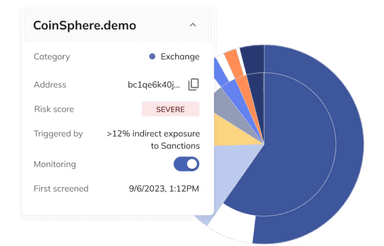
Exposure is the computed relationship between a given address or transaction and risky categories, expressed as direct (one hop) or indirect (multiple hops, usually value-weighted). Exposure math is where policy meets data: your program has to state what percentage of indirect mixer exposure, at how many hops, triggers review. Vendors compute it differently — some trace value through intermediaries proportionally, others use last-touch rules — and an examiner will expect you to know which method your numbers rest on.
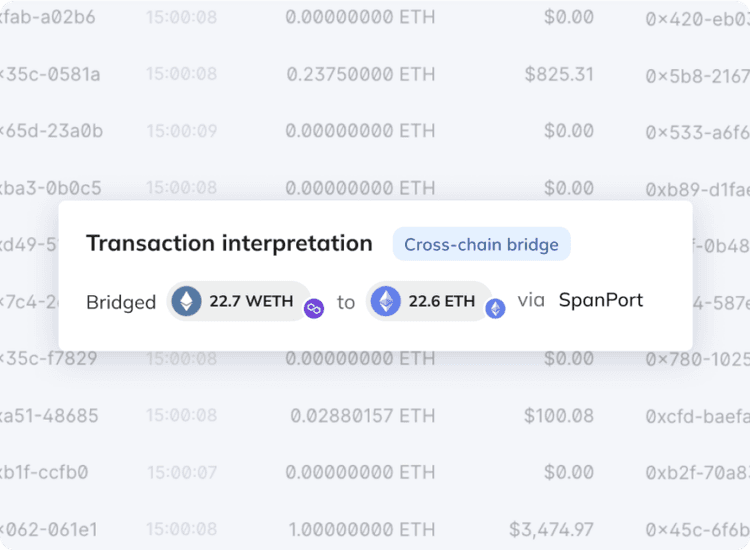
The hard version of all three problems is cross-chain. Funds that hop from Ethereum to Tron through a bridge, or swap through a DEX aggregator, used to fall off the edge of a trace. Modern platforms interpret bridge and swap transactions automatically and continue the trace on the destination chain, but coverage varies sharply by vendor and by bridge. If your business touches long-tail chains, ask for the specific bridge-interpretation list in writing during procurement.
The four jobs compliance teams hire analytics for
Blockchain analytics for compliance is not one product. It is four distinct jobs that happen to consume the same underlying data, and most vendors package them as separate modules with separate pricing.
The first job is screening at onboarding and deposit: an API call that returns a risk verdict for a counterparty address or an incoming transaction in milliseconds, so the decision can happen before funds credit. This is the job your crypto sanctions screening tools perform against OFAC's SDN list and its growing set of designated addresses.
The second job is ongoing transaction monitoring: rules and behavioral models that watch settled activity for patterns — structuring, rapid pass-through, mixer proximity, peel chains — and raise alerts into a case queue. This is the crypto-native half of the monitoring obligation that examiners test under the Bank Secrecy Act, and it is covered in depth in our guide to transaction monitoring for crypto exchanges.
The third job is investigations: a human analyst with a graph tool tracing funds hop by hop to answer a specific question — where did the ransom go, is this deposit traceable to the exploit, what services did the subject use to cash out. Investigations tooling is judged on tracing ergonomics, cross-chain continuity, annotation, and whether its output can be exported into a format a court or regulator will accept.
The fourth job is risk reporting and audit: portfolio-level exposure dashboards, board reporting, and the evidence trail that shows an examiner your thresholds fired and your team dispositioned alerts on time.
Because no single public comparison lays these four jobs and their operational demands out side by side, we compiled one from vendor documentation, FinCEN and OFAC enforcement materials, and the deployment patterns we see across exchanges and fintechs:
| Job | Typical trigger | Latency need | Staffing it implies | What failure looks like |
|---|---|---|---|---|
| Screening (pre-credit) | Deposit, withdrawal, onboarding | Milliseconds, synchronous | None per event; sanctions officer for hits | Sanctioned funds credited, OFAC violation |
| Transaction monitoring | Settled activity, batch or stream | Minutes to hours | Alert analysts, QA reviewer | SAR filed late or never; exam finding |
| Investigations | Case, subpoena, incident | Days, human-paced | Trained investigators with graph tool | Untraceable funds, unanswerable regulator request |
| Risk reporting | Monthly/quarterly cycle | Batch | Compliance officer, MLRO | Board unaware of exposure drift |
The staffing column is the one procurement teams skip. A screening API needs almost no headcount; a monitoring module generates a daily alert queue that must be worked; an investigations seat is useless without an analyst trained to use it. Budgeting for licenses without budgeting for the humans behind them is how backlogs form.
More in Screening & Monitoring
How a trace actually works
A live investigation gives the clearest picture of what the analytics layer contributes, so walk through a typical one: your exchange receives a law-enforcement request about a customer who deposited funds six weeks ago, and you need to establish where those funds originated.
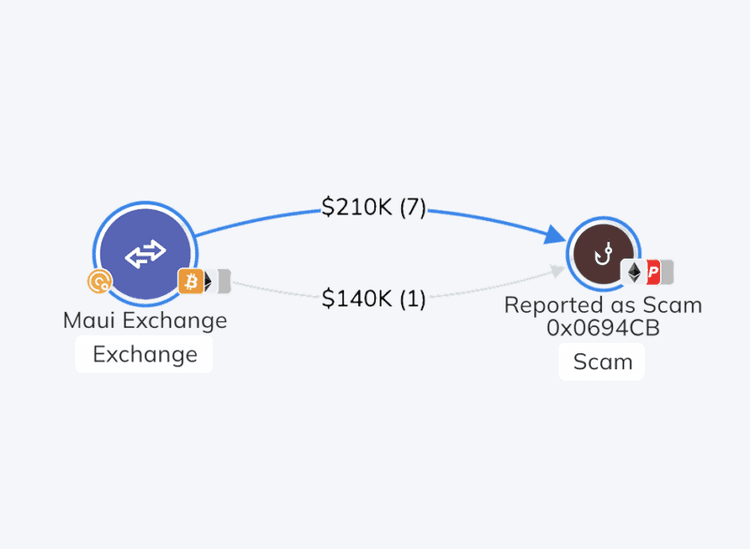
The analyst starts from the customer's deposit address and pulls it into the graph tool. Clustering immediately matters: the deposit address resolves to your own exchange cluster, so the analyst steps backward to the sending address. Attribution labels it as unhosted — no entity match — so the trace continues hop by hop. Two hops back, the value passes through a service the platform labels as a high-risk exchange with no KYC. One hop before that, the funds emerge from an address the platform links to a phishing campaign, reported by victims and corroborated by the vendor's intelligence team.
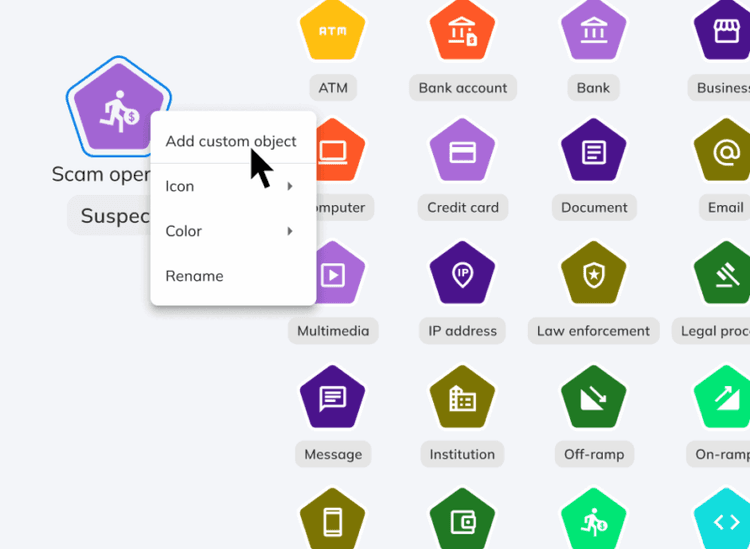
At each hop the analyst is making value-attribution judgments the tool supports but does not make alone: when an address receives from five sources and sends to three destinations, which output carries the tainted value? Platforms interpret common patterns — peel chains, consolidation transactions, bridge hops — automatically, and the analyst annotates the graph with custom objects (subjects, case numbers, off-chain facts like an IP address from your own logs) so the final export reads as evidence rather than as a screenshot.
The output is a documented fund-flow narrative: origin category, intermediary services, amounts, dates, and the confidence basis for each attribution. That narrative feeds a SAR, a response to the law-enforcement request, and — if the customer relationship is exited — the rationale in the case file. None of this is possible at examination quality with a block explorer and a spreadsheet, which is why investigations tooling belongs in the budget even for firms whose alert volumes are modest.
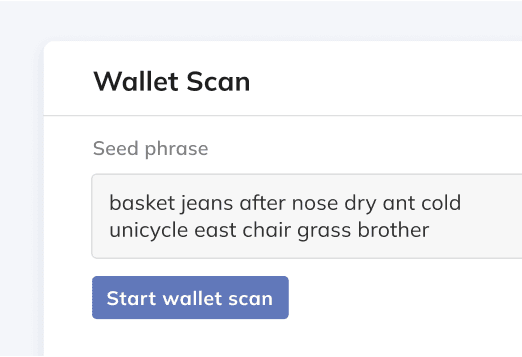
One newer capability worth knowing exists: seed-phrase and wallet-scan tooling, which lets an authorized investigator take custody-relevant material recovered in an incident (for example, a seed phrase found during an internal fraud investigation or provided under legal process) and enumerate the wallets it controls across chains. It compresses days of manual derivation into minutes, with obvious evidence-handling caveats your counsel should own.
Choosing a provider without getting burned
Attribution libraries, cross-chain coverage, and exposure methodology differ enough between vendors that the choice is consequential, but the evaluation method matters more than the shortlist. Three tests separate marketing from capability.
First, run a retrospective benchmark: take twenty of your own historical cases — deposits you investigated, counterparties you exited — and ask each candidate to score them cold. You are measuring whether their attribution would have caught what you caught, and what it flags that you missed. Vendors confident in their data agree to this readily.
Second, test asset and chain coverage against your actual book, not the vendor's supported-asset count. A platform that covers 100 million assets but interprets none of the bridges your users route through will break traces exactly where your risk concentrates.
Third, interrogate the exposure methodology. Ask how indirect exposure is value-weighted, how many hops it looks through, how mixer obfuscation is handled, and how quickly new sanctions designations propagate to scoring. OFAC's designation of Tornado Cash in August 2022 made propagation speed a measurable compliance variable: firms whose vendors labeled the contracts within hours blocked cleanly; firms on slower data did not.
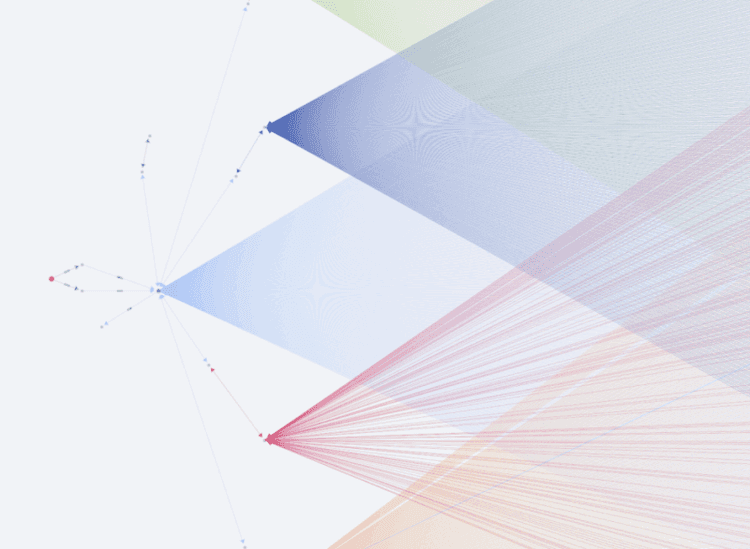
Scale is the final check. Criminal operations now run tens of thousands of addresses, and pig-butchering networks launder through sprawling multi-service topologies. The platform has to render and compute over graphs that size without the analyst waiting minutes per expansion.
A note on data sharing: exposure scores travel with your compliance obligations, not instead of them. Analytics verdicts are inputs to your risk-based program; they are not a delegation of judgment. FinCEN's 2023 Binance action made the point at record scale — the firm had analytics vendors under contract while willfully failing to file SARs on activity its own tools surfaced. Tooling without disposition is evidence against you, not for you.
Common mistakes that show up in examinations
- Screening only at onboarding. Address risk is dynamic — a clean counterparty at account opening can become one hop from a sanctioned service a month later. Programs that never re-screen settled activity find out from a subpoena instead of an alert.
- No documented indirect-exposure threshold. "We review risky transactions" is not a policy. Examiners ask for the number: what percentage of value, at how many hops, from which categories, triggers review versus blocking. If the answer lives in an analyst's head, it is a finding.
- Licensing the API and skipping the investigations tool. The screening API answers "is this risky." It cannot answer "where did the money go," and the day a regulator asks that question is not the day to start a procurement cycle.
- Treating vendor attribution as infallible. Attribution is probabilistic intelligence, not ground truth. Blocking a customer solely on a mislabeled cluster creates its own complaint and legal risk; the analytics verdict starts the review a human finishes.
"We are a fifty-person exchange with one compliance officer and rising deposit volume" — this team wires a single vendor's screening API into the deposit path first, sets conservative auto-block rules for direct sanctions exposure, and licenses one investigations seat so subpoena responses do not require emergency spend. Monitoring rules start with the vendor's defaults and get tuned quarterly against alert-disposition data.
"We are a fintech adding crypto on-ramps through a custody partner" — this team confirms in writing which analytics checks the partner performs and at what thresholds, then closes the gap the partner leaves: the fintech still owns SAR decisions for its customers, so it needs read access to the partner's alert data or a lightweight screening layer of its own. The partner's travel rule compliance solution and its analytics stack should be evaluated as one package, because counterparty VASP risk data flows through both.
"We are a mid-size platform preparing for a state or federal examination" — this team spends its effort on evidence, not new tools: exporting six months of alert dispositions, documenting the exposure methodology and thresholds in the AML policy, and running one internal end-to-end trace exercise so the investigations workflow is demonstrated, not described, when the examiner asks.
Frequently asked questions
Is blockchain analytics legally required for crypto compliance?
No statute names the product category, but the obligations it serves are mandatory for covered firms: sanctions compliance under OFAC's strict-liability regime, and suspicious-activity monitoring and reporting under the Bank Secrecy Act for money services businesses. Regulators have made clear in enforcement actions and exam manuals that they expect crypto-native firms to use chain-level data; in practice, analytics is how that expectation is met.
What is the difference between direct and indirect exposure?
Direct exposure means an address transacted with a risky entity in one hop — your customer received funds straight from a sanctioned address. Indirect exposure means the connection runs through intermediaries — funds passed through one or more addresses before reaching your customer. Direct sanctions exposure generally requires blocking; indirect exposure is where your documented, risk-based thresholds decide between review, restriction, and filing.
Can blockchain analytics trace funds through mixers and bridges?
Partially, and improving. Cross-chain bridges are largely traceable because bridge contracts create interpretable on-chain records, and leading platforms follow value across them automatically. Mixers are harder by design: analytics can establish that funds entered and exited a mixer and can sometimes demix specific patterns statistically, but a trace through a well-operated mixer carries lower confidence, which is exactly why mixer exposure itself is treated as a risk signal.
Do we need blockchain analytics if our custody or banking partner already screens?
You need access to the results and the right to act on them, at minimum. Reliance on a partner's screening must be documented, tested, and consistent with your own risk appetite — and SAR obligations for your customers typically remain yours. Most firms in partner models keep a lightweight screening capability of their own for independent verification and for investigating alerts the partner escalates.
How is analytics different from transaction monitoring?
Analytics is the data layer — attribution, clustering, exposure. Transaction monitoring is a control built on top of it: rules and models that convert that data plus your customer context into alerts and cases. You can buy them from one vendor or compose them from two; what matters is that monitoring rules can consume chain-level risk signals, not just fiat-style velocity patterns.
Sources
U.S. Department of the Treasury, Office of Foreign Assets Control
U.S. Department of Justice and FinCEN
FinCEN