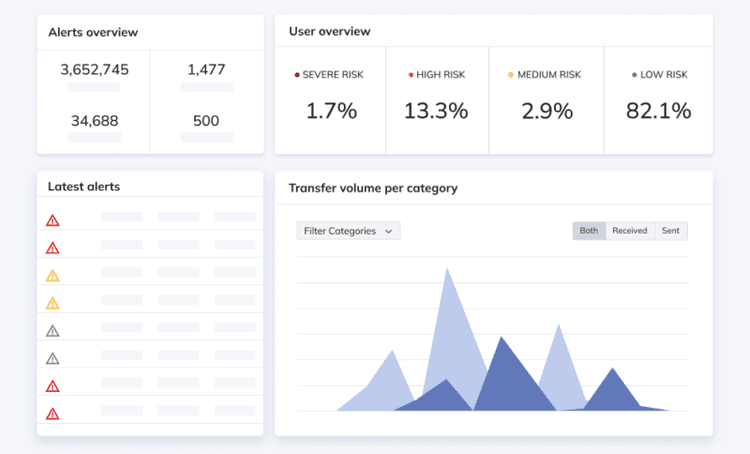
Every crypto business that touches customer funds runs on the same uncomfortable fact: the blockchain does not care where money came from, but regulators do. An exchange that credits a deposit traced to a sanctioned mixer, a fintech that onboards a customer with a forged passport, a payment processor that misses a structuring pattern — each has committed a compliance failure that can end in fines, license loss, or criminal referral. Crypto AML compliance software exists to catch those failures before they happen, and the market for it has matured from a handful of analytics startups into a stack every serious venue licenses.
Quick solution
If you only need the shortlist: license one blockchain-analytics platform (Chainalysis, Elliptic, or TRM Labs — trialed on your own transaction data before you sign), one identity-verification vendor for KYC and KYB, transaction-monitoring rules wired into a single staffed alert queue, and sanctions screening at both onboarding and deposit time. Then size an analyst team to your projected alert volume and document every threshold-tuning decision. The rest of this guide explains why each piece exists and how to avoid the failure patterns regulators actually fine.
This guide explains what the software actually does — not the marketing version, but the four working layers: blockchain analytics, transaction monitoring, identity verification, and sanctions screening. It covers how the major categories differ, what the enforcement record teaches about where programs fail, and how to run a selection process that matches tooling to your licence obligations rather than to a vendor's demo. It is written for compliance officers, founders preparing for licensing, and risk teams inheriting a program built by someone else.
Strip the acronyms and the job is a pipeline. Money arrives or leaves; software decides in seconds whether that movement is ordinary or reportable. The pipeline has four working layers, and mature programs run all four.
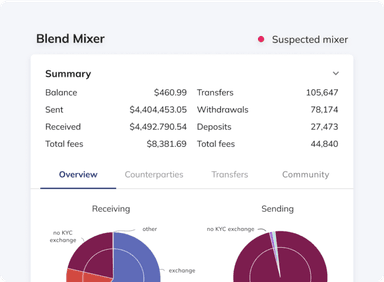
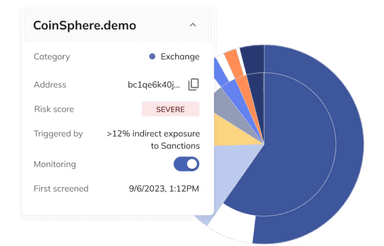
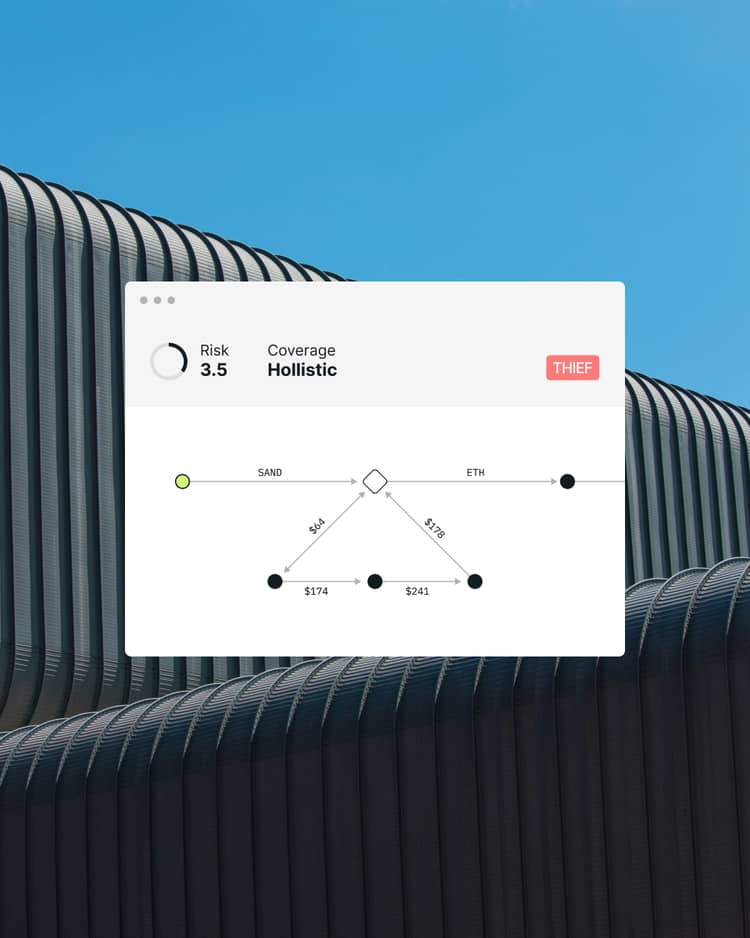
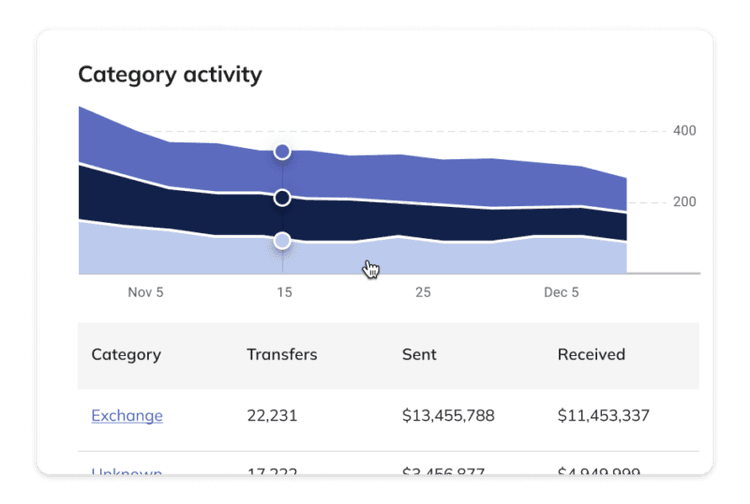
Blockchain analytics is the layer unique to crypto. Vendors such as Chainalysis, Elliptic, and TRM Labs cluster blockchain addresses into real-world entities — exchanges, mixers, ransomware operators, sanctioned services — by combining on-chain heuristics with off-chain intelligence. When a deposit arrives, the software walks the transaction graph backward and answers: what proportion of these funds passed through entities we classify as high-risk? That exposure score drives everything downstream.
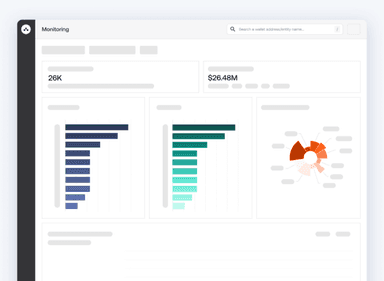
Transaction monitoring watches behavior over time rather than a single transfer. It flags structuring (many deposits just under reporting thresholds), rapid in-and-out flows, velocity spikes against a customer's stated profile, and interaction patterns that match known typologies. In crypto this layer must fuse on-chain data with internal ledger activity, because a customer's exchange trades never touch the chain.
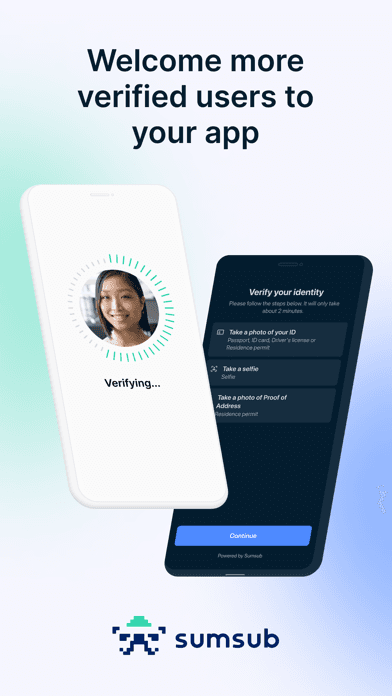
Identity verification — KYC for individuals, KYB for entities — anchors every alert to a person. Document checks, liveness detection, registry lookups for corporate customers, and politically exposed person screening happen at onboarding and on a refresh cycle. We cover the vendor landscape for this layer in our KYC and KYB guide.
Sanctions screening runs both on names and on chain data: customers are screened against OFAC, UN, and EU lists at onboarding and at every list update, while deposits are screened against sanctioned addresses in real time. The two halves are different products with different failure modes, which is why we treat sanctions screening tools separately.
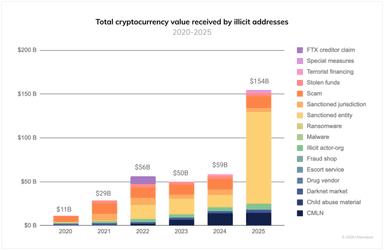
The reason this software category exists at its current scale is that regulators have shown they will use their largest penalties on crypto AML failures. Three cases define the modern baseline.
The Binance resolution of November 21, 2023 — roughly $4.3 billion across FinCEN, OFAC, and the Department of Justice — established that willful failure to run a functioning AML program is treated as seriously in crypto as in banking, and that "we grew too fast to comply" is an admission, not a defense. The consent orders read like a checklist of the four layers above, absent.
OFAC's sanctioning of Tornado Cash on August 8, 2022 changed the technical requirements overnight: from that day, every US-touching venue needed the ability to detect exposure to a smart-contract mixer — not just direct deposits from it, but funds that passed through it several hops back. Venues whose screening stopped at one hop discovered the difference between owning a tool and running a program.
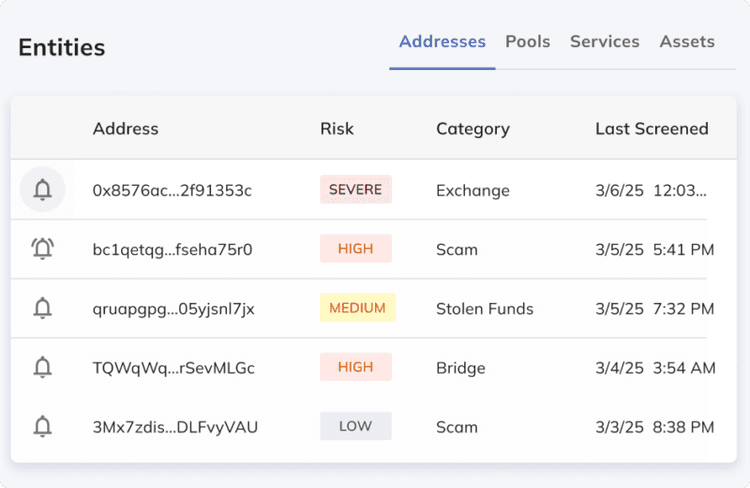
And the steady drumbeat of state and federal actions against exchanges with weak transaction monitoring has made one operational metric — alert backlog — a regulatory exhibit. An alert queue that grows faster than analysts clear it is documentary evidence that monitoring exists on paper only.
The lesson for software selection: regulators do not credit tool ownership. They test whether alerts fire, whether humans disposition them on time, and whether reports actually reach FinCEN or the local FIU. Software that generates alerts nobody can triage is a liability generator.
The software categories compared
Because no single public comparison lays the crypto AML software categories side by side for a buyer, we compiled one from vendor documentation, regulatory guidance, and the enforcement actions discussed above.
| Factor | Blockchain analytics (Chainalysis, Elliptic, TRM) | Transaction monitoring platforms | Identity / KYC-KYB (e.g. Sumsub) | Sanctions screening |
|---|---|---|---|---|
| Core question answered | Where did these funds come from and go? | Is this customer behaving abnormally? | Is this customer who they claim? | Is this name or address on a list? |
| Data source | On-chain graph + vendor intelligence | Internal ledger + chain data | Documents, biometrics, registries | Government lists + chain attributions |
| Runs at | Deposit and withdrawal time | Continuously | Onboarding + refresh | Onboarding, list updates, transfer time |
| Typical output | Risk score and exposure breakdown | Alerts against typologies | Verified identity or rejection | Match / no-match with audit trail |
| Regulatory anchor | FinCEN guidance, OFAC expectations | BSA monitoring and SAR duties | CDD rule, MiCA, local KYC law | OFAC, UN, EU sanctions regimes |
| Failure mode | Stale attributions miss new entities | Alert backlog, tuned-out rules | Forged documents, synthetic IDs | Fuzzy-match misses, list lag |
Two things stand out in that table. First, no category substitutes for another — analytics without monitoring misses behavioral risk, monitoring without identity cannot file a useful report. Second, every category's failure mode is operational, not technical: the software fails silently when the humans and processes around it are underbuilt.
The market has also consolidated in a direction the table hints at: blockchain-analytics vendors keep expanding into adjacent cells, adding transaction-monitoring rules, case management, and even travel-rule messaging to their core attribution product. That makes single-vendor stacks tempting for small teams — one contract, one integration, one dashboard. The tradeoff is concentration risk: if that vendor's attributions are weak in a corridor that matters to you, every layer inherits the blind spot at once. Larger venues deliberately split providers, or run two analytics engines in parallel on high-value flows, precisely so that one vendor's miss is another's catch.
Buying the four layers is the easy part; wiring them into the business is where programs succeed or fail. Three integration patterns dominate.
API-first at the money boundary. Every deposit, withdrawal, and onboarding event calls the relevant vendor synchronously, and the business logic enforces the answer — funds are not credited until screening returns, withdrawals to flagged addresses are held for review. This is the pattern regulators assume; anything asynchronous creates windows where dirty funds move freely.
Case management as the system of record. Alerts from all four layers land in one queue with ownership, deadlines, and disposition history. When an examiner asks "show me what happened after this alert fired," the answer must be a case record, not a Slack thread. Most analytics vendors now ship case tooling; larger venues integrate alerts into dedicated platforms instead.
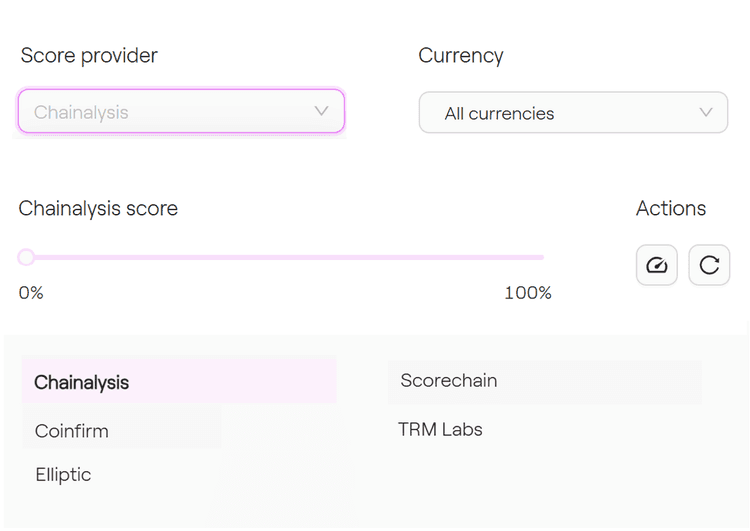
Screening embedded in infrastructure. Custody platforms and wallet infrastructure increasingly embed screening natively — the Taurus configuration shown above is typical, treating Chainalysis, Elliptic, TRM Labs, and others as pluggable scoring providers behind a policy engine. For firms building on such infrastructure, the integration question becomes configuration: which provider, what thresholds, which currencies, and what happens on a hit.
The travel rule adds a fifth integration surface: for transfers between regulated venues, originator and beneficiary information must move alongside the funds through dedicated messaging protocols, and your AML stack must reconcile that data with what the chain shows.
More in Programs & Risk
Sizing the program: thresholds, tuning, and staffing
The most consequential decisions in an AML deployment are numbers, not vendors. Risk-score thresholds determine what share of deposits generate alerts; a threshold set too sensitive at a retail exchange can generate thousands of daily alerts and bury the three that matter. Tuning is a documented, iterative process: start with vendor defaults, measure false-positive rates per rule, adjust with written rationale, and keep the change log — examiners read tuning history as evidence of a living program.
Staffing follows from alert volume. A useful planning ratio is that one analyst dispositions somewhere between a few dozen and a hundred alerts a day depending on complexity; if projected volume implies a team you cannot hire, the answer is better tuning and automation of the low-risk tail, not silent backlog growth. Escalation paths need names attached: who files the suspicious activity report, who decides on customer exit, who can freeze a withdrawal at 2 a.m.
Budget-wise, expect analytics licensing to scale with transaction volume, identity verification to price per check, and the real cost to sit in people. A program that spends heavily on tools and nothing on analysts reproduces the exact failure pattern the enforcement record documents.
One planning exercise pays for itself: before signing any contract, take a month of your own historical transactions, run them through each candidate vendor's scoring, and count the alerts each configuration would have generated. That number — not the vendor's stated false-positive rate, which was measured on someone else's traffic — tells you what your analysts will actually face. It also exposes coverage gaps early: a vendor that cannot score a chain you support, or that returns "unknown entity" for a large share of your counterparties, reveals that weakness in an afternoon of testing rather than six months into a contract.
Common mistakes when buying crypto AML software
Buying one layer and calling it a program. A blockchain analytics licence is not an AML program. Venues that screen deposits but run no behavioral monitoring, or verify identity once and never refresh, have covered a quarter of their obligations and often believe they have covered all of them.
Selecting on database size claims. Vendors compete on how many entities they attribute, but the differences that matter are coverage of your specific corridors — the chains you support, the jurisdictions your customers live in, the typologies your business model attracts. A vendor bake-off on your own historical data beats any brochure number.
Ignoring alert operations until after launch. The software will generate alerts from day one. If the disposition workflow, staffing, and SAR-filing process are designed afterward, the backlog that accumulates in between is permanent regulatory evidence.
Treating screening as a one-time gate. Attributions update daily; an address clean at deposit time may be linked to a hack a week later. Programs that never re-screen holdings or review historical exposure against new intelligence miss exactly the retrospective risk that lookback exercises in enforcement actions are designed to expose.
"We are a startup exchange preparing our first licence application." Regulators will ask which vendors you use, but they will scrutinize your policies, thresholds, and staffing plan harder. Licence one analytics provider, one identity vendor, and a monitoring capability sized to your launch volume, and document the tuning rationale from day one. Our guide to transaction monitoring for exchanges covers the rule sets examiners expect at launch.
"We are an established fintech adding crypto features." Your existing fiat AML program is an asset — extend its case management and governance rather than building a parallel crypto silo. The genuinely new pieces are blockchain analytics at the deposit boundary and chain-aware sanctions screening; integrate those into the alert queue your team already runs.
"We are a compliance team inheriting a program built before the current rules." Run a gap assessment against the four layers, then test operationally: sample recent deposits and check whether exposure was scored, alerts fired, and dispositions were recorded on time. The most common inherited defect is a screening tool wired in but thresholds never tuned — configured once by an engineer, reviewed by no one since.
Frequently asked questions
What is crypto AML compliance software?
It is the tooling stack that lets a crypto business meet anti-money-laundering obligations: blockchain analytics that trace fund origins, transaction monitoring that flags abnormal behavior, identity verification that anchors accounts to real people, and sanctions screening that blocks listed parties and addresses.
Which blockchain analytics vendors dominate the market?
Chainalysis, Elliptic, and TRM Labs are the names most examiners recognize, with Scorechain and Coinfirm among the alternatives. They differ in chain coverage, attribution methodology, and pricing model — which is why a trial on your own transaction data is the only selection method that reliably discriminates.
How much does crypto AML software cost?
Analytics licensing typically scales with transaction volume and starts in the tens of thousands of dollars annually for a small venue; identity verification prices per check, commonly under a few dollars each at volume. The dominant cost at scale is the analyst team that dispositions alerts, not the software.
Does AML software satisfy regulators by itself?
No. Enforcement actions consistently target the gap between owning tools and running a program: untuned thresholds, unstaffed alert queues, and unfiled reports. Software is necessary evidence of capability; the program around it is what gets examined.
Do decentralized platforms need AML software?
Any business with customers and control over funds flowing through it should assume AML obligations somewhere in its structure — the regulatory perimeter has consistently expanded, and front-ends, foundations, and fee recipients have all been reached by enforcement. The software stack is the same; the legal analysis of who must run it belongs with counsel.
Sources
US Department of Justice, FinCEN, and OFAC
US Treasury, Office of Foreign Assets Control
European Union